Dahshur is an archaeological site located in the desert on the west bank of the Nile River, about 40 kilometers south of Cairo, Egypt. Here are some key facts and information about Dahshur as a site:
Dahshur was a royal necropolis during the Old Kingdom period of ancient Egypt, which lasted from around 2686 BCE to 2181 BCE. The site contains the remains of several pyramids and tombs belonging to pharaohs of the Fourth and Twelfth Dynasties.
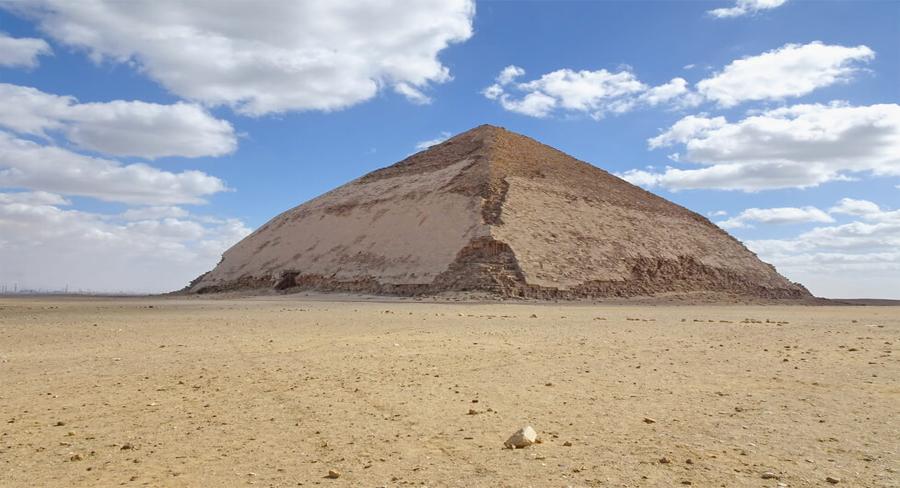
The most famous pyramids at Dahshur are the Bent Pyramid and the Red Pyramid. The Bent Pyramid was built by Pharaoh Sneferu in the early Fourth Dynasty and is named for its unusual bent shape. The Red Pyramid, also built by Sneferu, is the third-largest pyramid in Egypt and is named for the reddish hue of its limestone blocks.
In recent years, the Egyptian government has undertaken a major restoration and conservation project at Dahshur, aimed at preserving the site’s historic monuments and structures. This includes efforts to stabilize the pyramids and tombs, as well as the construction of new visitor facilities and amenities.
Dahshur is open to visitors and can be accessed by car or tour bus from Cairo. The site is open daily from 8:00 am to 4:00 pm, and tickets can be purchased on site. Visitors are advised to dress modestly and wear comfortable shoes, as the site can be dusty and uneven. Additionally, visitors are not allowed to climb on the pyramids or touch any of the ancient structures or artifacts.
The Bent Pyramid is one of the most unusual and distinctive pyramids in Egypt. It was originally built with a steep angle of 54 degrees, but the angle was later reduced to 43 degrees, giving the pyramid its distinctive bent shape. The pyramid is made of limestone and was originally covered in smooth white casing stones.
The Red Pyramid is the third-largest pyramid in Egypt, and it is one of the best-preserved pyramids from the Old Kingdom period. It was built by Pharaoh Sneferu, who is considered one of the greatest pyramid builders in ancient Egypt. The pyramid is named for the reddish hue of its limestone blocks, which are still visible today.
In addition to the pyramids, Dahshur also contains several tombs belonging to nobles and officials of the Old Kingdom. These tombs are decorated with scenes from daily life, as well as images of gods and goddesses. Some of the most famous tombs include the tomb of Princess Mereret and the tomb of the overseer of the treasury, Kagemni.